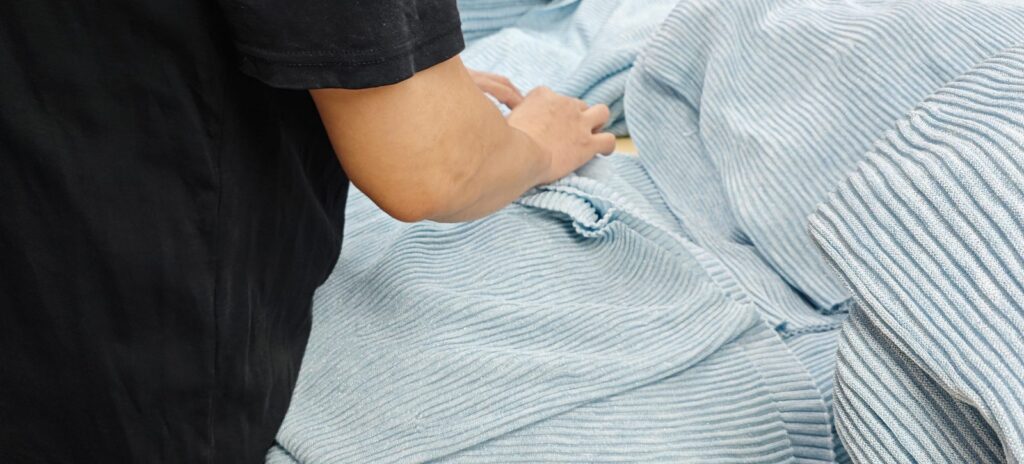
Bulk Sweater Manufacturer: Ordering from China


A bulk order rarely fails at the knitting machine. It fails in the four weeks before a machine is ever booked — at the yarn lot, the colour count, the carton plan and the deposit. Those four decisions are the whole job.
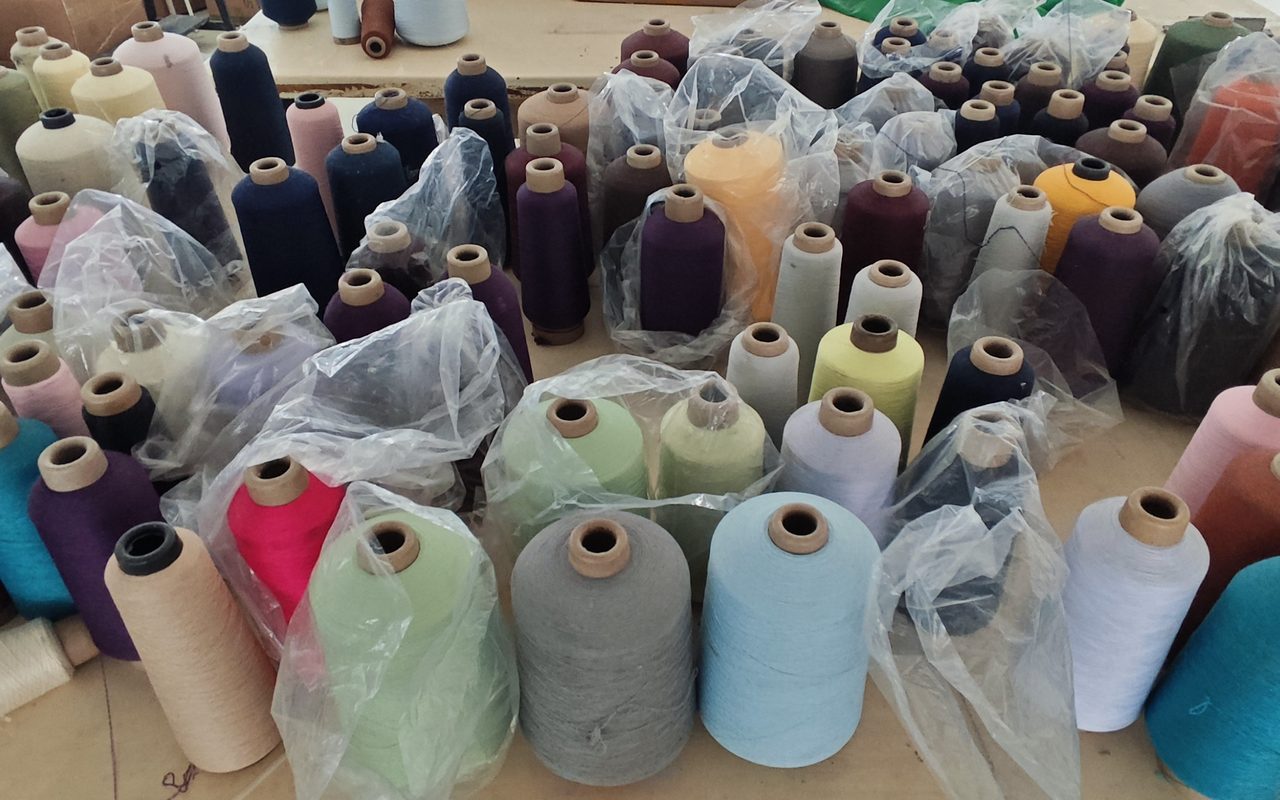
A bulk sweater order is a yarn order with a knitting stage attached. Buyers who plan it as a sewing order spend the next two months learning that distinction the hard way.
As a bulk sweater manufacturer in Dongguan, we quote a lot of programmes that began as a single sample and ended as a thousand cartons. The pattern is consistent: the buyers who get bulk right are not the ones with the biggest quantity. They are the ones who understood, before paying a deposit, that bulk is not a bigger sample — it is a different production object, with its own bottlenecks, its own paperwork and its own failure modes.
This page walks through what changes when a style moves from one piece to five thousand, in the order the changes actually happen: the yarn lot first, then the tier the order sits in, then the price numbers, then the money, then the verification. If you are ordering bulk knitwear from China for the first time, reading it in that order will save you a season.
Samples prove a factory can make the garment. Bulk proves the factory can make it five thousand times, in one shade, on one date.
Zhao Sheng, on why sample approval is not a green light
- Bulk is a yarn decision. Colour consistency across a run depends on one dye lot. Split the lot and you get shade bands in the cartons, no matter how good the knitting is.
- Quantity picks your tier. 50–150 pieces, 150–600, 600–2,000 and 2,000+ occupy the line in four different ways. Each tier has a different schedule logic, not just a different price.
- Five numbers fix the bulk price: yarn lot size, colour count, gauge, pack ratio, shipping mode. Four of the five are decided by the buyer, not the factory.
- Money follows the yarn. Deposits exist because yarn is bought before the first garment exists. Whoever pays for yarn controls the calendar.
- Our published line: 120+ flat knitting machines, 3GG–16GG, about 1,600,000 pieces a year, 5,000 m² floor, MOQ 50 pieces per style per colour, samples 3–7 days, bulk 20–25 days.
What “bulk” means to a knitting line: four tiers
Ask ten buyers what bulk means to a bulk sweater manufacturer and you get ten numbers, usually their own order size. On the floor the word means something narrower: how much of the line a style occupies, and for how long. A 60-piece run and a 4,000-piece run are not the same job done at different scales. They use different scheduling, different yarn purchasing and different quality routines.
The four tiers below are how we plan capacity. The thresholds are ours, not an industry standard, but the logic travels: at each step up, one more constraint stops being negotiable.
| Tier | Pieces per style | What changes on the line |
|---|---|---|
| Trial | 50–150 | One dye lot, one machine block. The approved sample panel is often reused as the production reference, so the gap between sample and bulk is short. |
| Colour run | 150–600 | Several colourways. Each colour needs its own lot and its own knitting slot, and the linking room load grows faster than the knitting load. |
| Programme | 600–2,000 | Machines held for weeks. Yarn is booked before knitting starts, QC is staged per colour, and a slipped yarn date moves the whole run. |
| Container | 2,000+ | Yarn bought in one lot up front. The carton plan now drives the shipping date, and the shipping date drives the knitting start. |
Tier boundaries are a planning convention at our plant. The MOQ itself does not move at any tier, because the constraint is the dye lot and the machine set-up, not the sewing line.
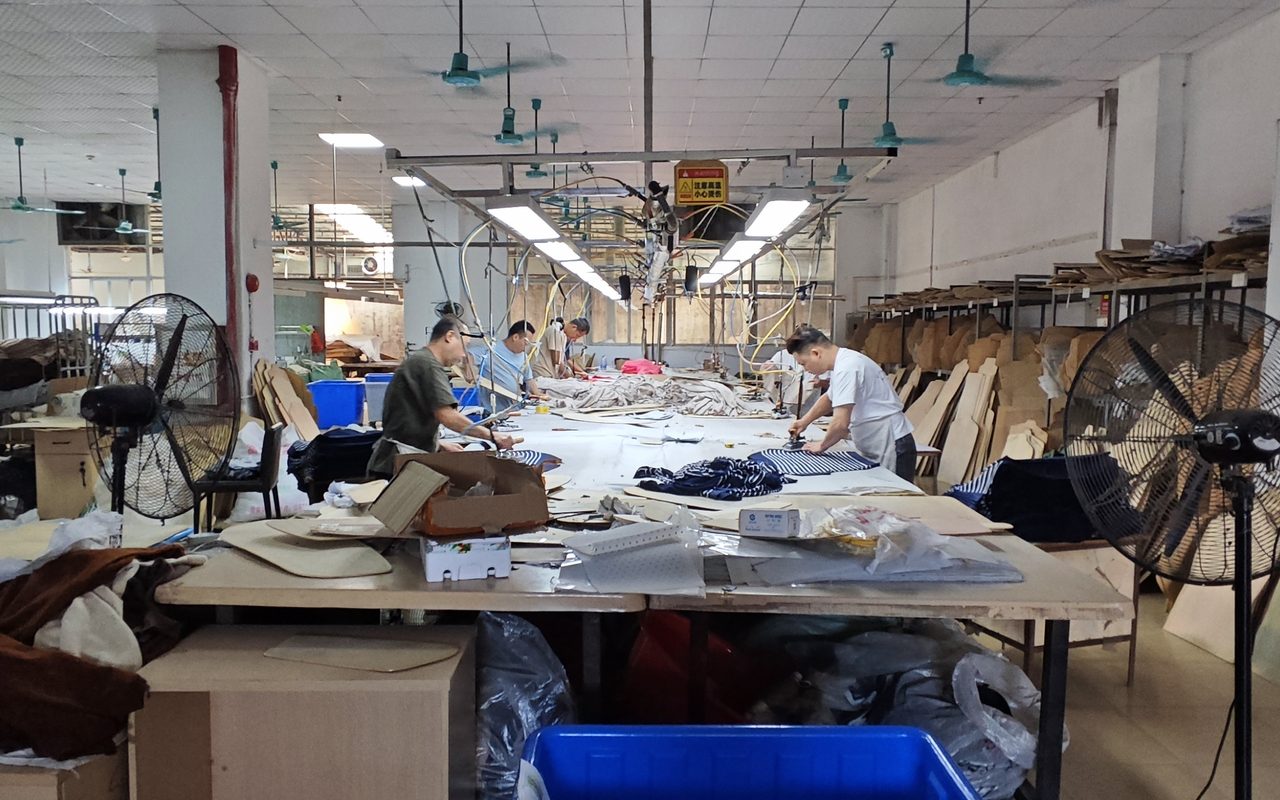
The yarn lot, not the sewing line, sets your bulk date
Here is the part of bulk that surprises first-time importers. Knitting is fast. Linking is fast. Pressing and packing are fast. The stage that refuses to be hurried is the one before all of them: buying and dyeing yarn to a single lot, then getting that lot approved.
Yarn dyed in two separate lots will not match, even from the same supplier, at the same count, on the same day. The difference is small in a lab and obvious in a carton: sleeve against body, one size against the next, the top of a stack against the bottom. Buyers who ask for “the same colour, we will take it in two deliveries” are asking for shade bands, and no factory can knit its way out of that.
This is why our published bulk lead time of 20–25 days is measured from two conditions, not one: sample approved, and yarn in house. If the yarn is a stock shade already on the rack, the clock starts when the sample is signed off. If the colour has to be dyed, the clock starts later — and no amount of chasing the knitting department will recover those days.
Practically, that means the question to ask any sweater factory in China before you compare quotes is not “how fast can you knit” but “is the yarn for my colour in stock, and how long does dyeing take”. Two factories quoting the same price with different yarn positions are quoting two different delivery dates.
Five numbers that fix a bulk price before the quote
Bulk pricing arguments usually happen after the quote, when it is too late to change anything. They are avoidable, because almost every variable that moves a bulk price is a number the buyer controls. Give all five up front and the quote stops moving.
One: yarn lot size. Yarn is priced per lot. Order 600 pieces in four colours and you buy four small lots; order 600 in one colour and you buy one larger lot at a better rate. Colour count is the single most expensive sentence in a bulk enquiry.
Two: colourways. Every additional colour adds a dye lot, a knitting slot, a linking changeover and its own QC pass. This is why bulk womens sweaters in six shades cost more per piece than the same quantity in two, even at identical construction and gauge — the same arithmetic that decides what wholesale clothing sweaters cost a shop buying three colours twice a year.
Three: gauge. A 3GG chunky uses far more yarn per garment than a 16GG fine knit, and yarn is the largest material line in the cost. Gauge also decides machine speed, so it moves both material and time.
Four: pack ratio. How many pieces go in a carton, and how the carton is marked. A pack ratio that suits warehouse picking (mixed sizes, small cartons) costs more than a flat pack of one size, and it changes how many cartons your container holds.
Five: shipping mode. Sea, rail or air, and whether the carton plan was built for a container or for pallets. Air freight on knitwear is rarely rational, but we see it requested most often exactly when the yarn stage was squeezed — which is the same mistake paid for twice.
Four of the five numbers that set a bulk price belong to the buyer. The factory only prices what the buyer has already decided.
Zhao Sheng, on quotes that move after the deposit
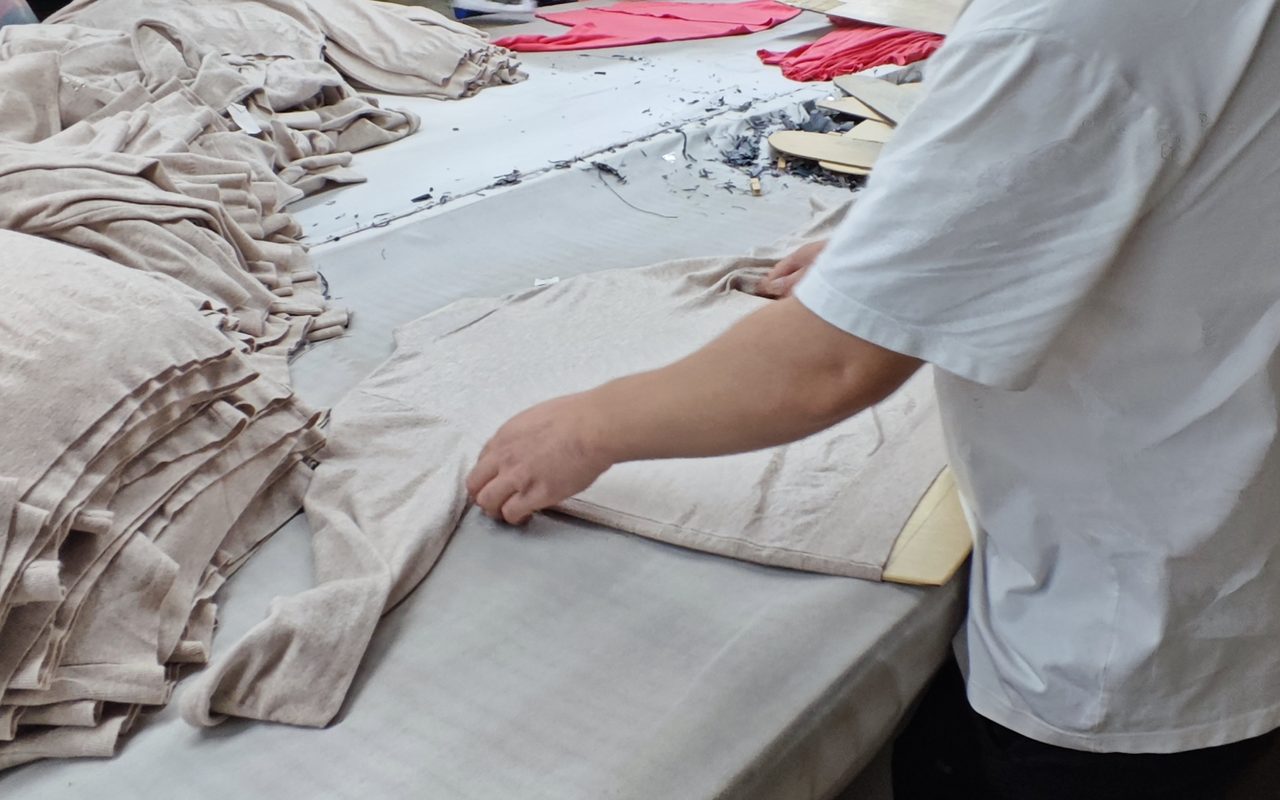
Deposit, balance and who actually carries the risk
Bulk orders are financed by the buyer’s deposit because the factory spends money before the first garment exists. Yarn, dyeing, trims and machine time are all committed against a signed order, often weeks before anything can be shipped. That is the economic reason deposits exist, and it is not negotiable in the way buyers hope.
On most first orders in this trade the split is 30% deposit against the order and 70% against the bill of lading copy, with larger programmes moving to a letter of credit. Whatever the split, three things belong in writing before the deposit leaves: what the deposit covers, what triggers the balance, and what happens if the inspection fails.
That third clause is where wholesale knit sweaters deals most often go wrong. If the balance is due on shipment and the inspection happens after shipment, the buyer has paid for goods nobody has checked. The workable sequence is inspection first, balance against the passed report and the B/L copy, then release of the documents. A factory that resists that order of events is telling you something about its QC.
One more piece of housekeeping: the deposit should name the yarn lot. If a supplier cannot tell you which lot is reserved for your order, the shade guarantee in the contract is decorative.
Bulk knitwear from China: what to verify before the deposit
There are thousands of china clothing suppliers who will quote a sweater, and the same enquiry sent to ten china apparel wholesale suppliers or china wholesale garments suppliers comes back as ten prices with no yarn position attached. Most of those desks will broker the order to a plant you never see. That is not automatically bad — agents have a role — but a buyer ordering bulk needs to know which of the two is answering the email, because the answers to schedule questions come from different places.
Five checks separate a knitting plant from a trading desk. First, machine count and gauge range, stated as numbers: a plant that runs 3GG–16GG on 120+ machines can move a style between gauges; a broker quotes whatever the sub-contractor has free. Second, in-house linking — if panels are sent out to be joined, the schedule now depends on a second company.
Third, yarn sourcing: who buys the yarn, and can they show a lot number. Fourth, sampling: how many days for a sample, and is the sample made on the same gauge as bulk. Fifth, export paperwork: whether the invoice, packing list and certificate of origin are issued by the same entity that knits.
Where the supplier is a generalist, ask for the knitwear specialist inside it. A wholesale clothes china manufacturer that also does woven shirts will usually sub-contract the sweater programme, and contract manufacturing companies in china of that shape are fine for a trial run and awkward for a 3,000-piece container. A directory of suppliers in china for clothes lists the generalist and the specialist side by side, which is why the machine list matters more than the listing. If you want a chinese sweater manufacturer rather than a generalist, that list is the fastest test: it cannot be faked for long, and it tells you the gauge range before anyone talks price.
This is the same discipline covered in our comparison of a sweater manufacturer and a knitwear supplier, and the same eight questions appear, in a different order, in what buyers check for quality.
Pre-shipment: what an inspection actually measures
A pre-shipment inspection is not a vibe check. Done properly it produces numbers you can argue with, and the numbers come from the spec sheet you approved at sampling — not from the inspector’s taste. If no measurement spec exists, the inspection has nothing to measure against, which is the most common reason bulk disputes become unresolvable.
Four things should appear in the report. Measurements, against the approved points and tolerances. Workmanship, sampled to a stated AQL level, with defects classified rather than counted in a lump. Colour continuity, checked across cartons rather than within one — shade bands live at the boundary between lots and between production days. Packing, meaning the actual pack ratio, carton marks and assortment against what the order says.
An inspection without an approved measurement sheet measures nothing. It just produces an opinion with photographs attached.
Zhao Sheng, on why sampling paperwork matters more than the sample
For anyone ordering bulk wool sweaters or any wool-rich blend, add a fifth item: relaxation. Wool settles after pressing, and a garment measured straight off the press can read differently two days later. Measure after relaxation, and write that into the spec so the factory and the inspector are measuring the same moment in the garment’s life.
Where bulk orders break, and the check before each gate
Three failures account for most of the bulk orders that go wrong in this trade, and all three happen before knitting starts. None of them is a manufacturing defect. They are planning defects that arrive as delivery problems.
Failure one: the split lot. The order is large, the yarn is short, and someone decides to start with what is available. Two lots, one style, shade bands in the cartons. The fix is patience at the yarn stage, and it is much cheaper than the fix later, which is either a re-knit or a discount.
Failure two: colour creep. Two colours are ordered. Before the deposit clears, a third is added for a key account, then a fourth. Each addition restarts a lot, a slot and a QC pass. This is the mechanism behind most “the price went up after we agreed” complaints, and it is why bulk kids sweaters programmes with many small colour groups need their colour count frozen earlier than adult programmes with two shades.
Failure three: the late carton plan. Pack ratio and carton marks are treated as packing-day details. They are not: they decide carton count, carton count decides container count, and container count decides freight. Changing the pack ratio two weeks before shipment is the most expensive administrative change in the whole order.
The check before each gate is unglamorous and short. Before the yarn booking: confirm one lot covers the full order, in writing. Before the deposit: freeze the colour count. Before knitting starts: sign the carton plan. Before the balance: pass the inspection. Four gates, each one cheap at the time and expensive afterwards.
| Gate | The one question that closes it | Cost of skipping |
|---|---|---|
| Yarn booking | Does one lot cover the whole order? | Shade bands, re-knit or discount |
| Deposit | Is the colour count frozen? | Re-quote mid-order, new yarn slots |
| Knit start | Is the carton plan signed? | Container re-plan, freight change |
| Balance | Has the inspection passed? | Paying for goods nobody measured |
The same four gates scaled down apply to first orders of 50 pieces; our startup checklist covers that version, and the MOQ note explains why 50 per colour is the floor.
Frequently asked questions
What is the minimum for a bulk order?
At our plant, 50 pieces per style per colour — the same number whether you order one colour or six. The floor is set by the dye lot and the machine set-up, not by the sewing line, which is why custom manufacturing china quotes that look dramatically cheaper usually hide a much higher colour minimum.
How long does a bulk order take?
20–25 days for bulk, counted from an approved sample with yarn in house. Add the yarn stage in front of that: stock shades move immediately, dyed shades add the dyeing window. Samples themselves take 3–7 days for one piece.
Can I split one order across sizes and colours?
Yes. Sizes can be assorted freely within a colour; colours are the constraint, because each one carries its own lot. A typical bulk men knitwear and sweaters order runs three colours across five sizes and still counts as one programme — three lots, one schedule.
Do you work with private label and own-brand trims?
Yes: woven labels, printed neck labels, hangtags and polybag stickers, all applied in-house at packing. Trims have their own lead time, so they need to be approved with the sample rather than ordered at packing — a detail that catches most first-time ladies sweater wholesale buyers.
Should I buy through an agent or direct?
Direct is cheaper and faster if you can verify the plant; an agent earns their fee when you cannot travel or cannot check documentation. What you should never do is buy through an agent while believing you are talking to a sweater manufacturers facility — ask which entity knits, and which entity invoices.
What documents come with a bulk shipment?
Commercial invoice, packing list, bill of lading and certificate of origin, with fibre composition on the label matching what the invoice declares — the labelling rules behind that are linked at the end of this page. Your broker confirms the customs heading against the actual garment.
What if the inspection fails?
The order does not ship and the balance is not due. What happens next depends on the defect class: a packing error is re-packed, a measurement drift is re-pressed or re-made, a shade band is a yarn problem and gets the most expensive answer. Write the remedy into the order before the deposit, not after the report.
Send quantities, colours and pack ratio — we will quote the tier you are actually in
Zhao Sheng runs Liming Knitwear in Dalang, Dongguan, acting as a bulk sweater manufacturer for brands and wholesalers in the US, UK and EU — 120+ flat knitting machines, 3GG–16GG, about 1,600,000 pieces a year on a 5,000 m² floor. MOQ 50 pieces per style per colour, samples 3–7 days for one piece, bulk 20–25 days from approved sample with yarn in house. Send the style, the colour count and the quantities per size, and the quote comes back with the yarn position stated.
WhatsApp / WeChat: +86 137 1519 6498
sychen@limingknitwear.com
References and further reading
Sources referenced on this page, checked live at publication:
- HTS Chapter 61 — Knitted and crocheted apparel (USITC): where bulk knitted sweaters are classified on entry to the United States.
- Informed Compliance Publications (U.S. Customs and Border Protection): CBP’s own guidance on textile entry, marking and admissibility — the documents side of a bulk shipment.
- 16 CFR Part 303 (eCFR): fibre identification and labelling rules that apply to every carton in the container.
- 15 U.S.C. § 70 (Legal Information Institute): the Textile Fiber Products Identification Act behind Part 303.
- EU Regulation 1007/2011 (EUR-Lex): the EU counterpart on fibre naming, for orders shipping to Europe.
These sources describe the labelling and entry environment a bulk order lands in; they are not legal advice and they do not set production targets. The customs heading for a specific shipment is confirmed by the importer’s broker against the actual garment.
Related notes from the same production floor: sampling step by step · MOQ mechanics · specs, MOQ and lead times · manufacturer vs supplier · quality checks · first-order gates · sweater vs jacket · shoulder constructions