Custom Knitwear Factory: Match the Mill to Your Order


A custom knitwear factory is not ranked best to worst. It is matched — to your gauge, your order shape and your calendar. Get the match wrong and a good mill becomes the wrong mill.
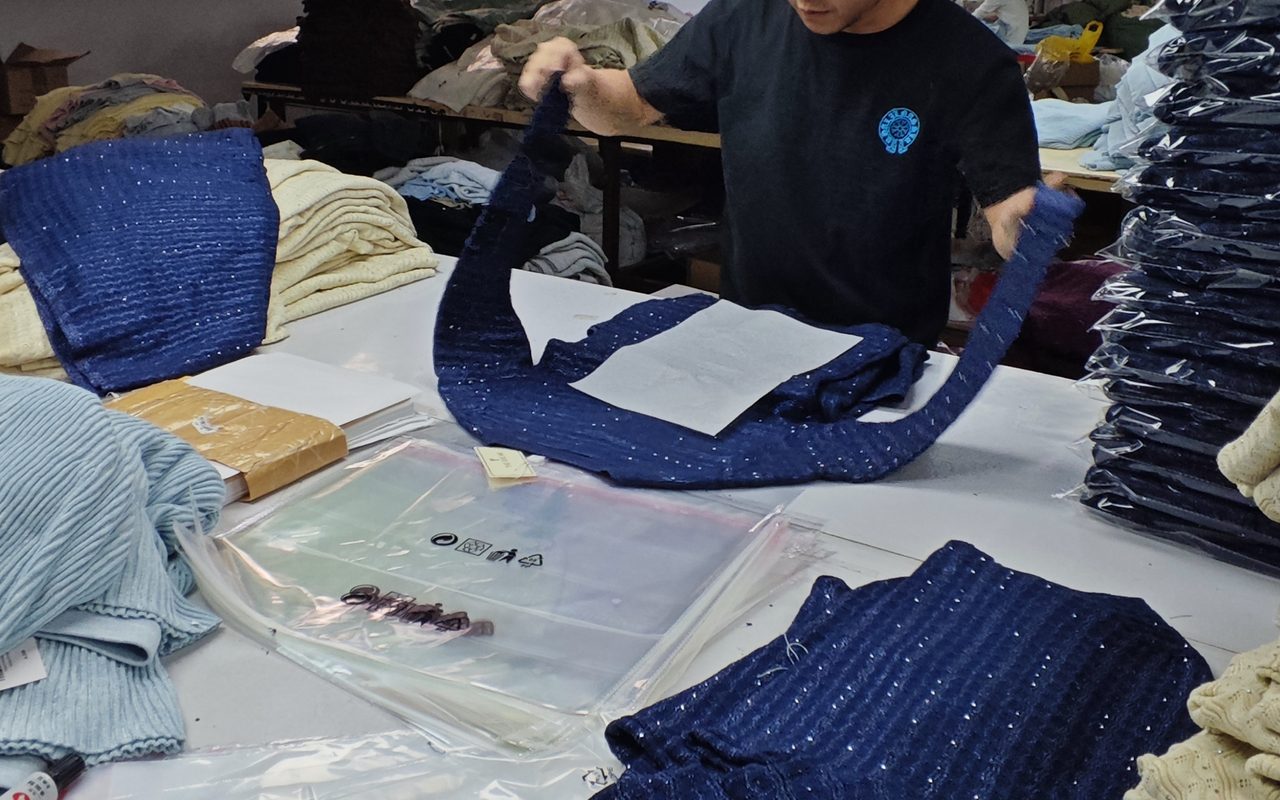
A factory is not a rank. It is a fit. The same mill is the right answer for one brief and the wrong answer for the next.
Three buyers wrote to us in one week asking for a sweater factory china recommendation. Their emails were almost identical: a knit top, a private label, a first order. Only one of the three was a genuine fit for our line. The other two needed a different kind of mill, and we said so. Matching a custom knitwear factory is not about finding the best one on a list. It is about finding the one whose machines, minimums and calendar line up with the order you actually have.
I run a knitwear factory in Dalang, and I have watched good buyers lose a season by sending the right product to the wrong line. Not because either side was careless. Because nobody asked the fit question first. This is the check I wish every buyer ran before a custom manufacturing factory matching decision turns into a deposit.
There is no best factory. There is a factory that fits this gauge, this quantity, this date. Change any one and the answer changes.
Zhao Sheng, on choosing a mill
- Fit beats rank. A well-regarded mill is the wrong mill if its gauges or minimums do not match your order.
- Four order shapes need four different lines. A sample run, a small colourways run, a bulk colour run and a complex-structure run do not want the same factory.
- The reply tells you the line. Ask about gauge range and minimum, and listen to whether the answer is specific or generic.
- Three mismatches cost a season: wrong gauge, wrong minimum, wrong finishing capacity — each is invisible until it is expensive.
- A factory should say no. If a mill says yes to every order shape, it is not flexible. It has not been honest about its line.
01 The question is not who is best, but who fits
Buyers search for a ranked list. There is no useful ranked list, because a factory is a set of constraints, not a score. Our floor runs a particular gauge range, a particular set of yarn counts, a particular minimum and a particular finishing sequence. Another mill in the same town runs a different set. Neither is better in the abstract. One of them fits your brief.
This is why creative knitwear company size matters less than people think. A larger plant is not automatically more capable of your order. It is more capable of some orders and less available for others. Size changes how a mill schedules, how it prices a short run and how quickly it can turn a machine around for you. The right question is not how big the factory is. It is whether its current setup can absorb your particular order without stretching it.
| What buyers ask | What actually decides fit |
|---|---|
| “Are you the best knitwear supplier?” | No ranking exists. Gauge range, minimum, finishing and date decide. |
| “How many machines do you have?” | Useful only with the gauge spread and what those machines are running now. |
| “Can you make this sweater?” | Most mills can make the garment. Fewer can make it at your quantity and date. |
| “What is your price?” | A number with no line behind it. Fit has to be settled before price means anything. |
A mill’s constraint is not a weakness to hide. It is the information you need to decide.
02 Four order shapes, four different lines
Almost every first enquiry lands in one of four shapes. They look similar in an inbox. On the floor they ask for four different things. Knowing your shape tells you which factory to approach and which questions to ask first.
| Order shape | What the line needs | What breaks it |
|---|---|---|
| One sample, one colour | A mill that will run a single piece and still wash and check it | A line only set up for full runs; the sample never gets real finishing |
| Small run, several colourways | Yarn in many shades, accurate shade grouping, flexible machine scheduling | Minimums written per colour that you did not see in the quote |
| Bulk, one or two colours | Lots of one yarn, a stable program, repeatable finishing | A mill that treats your order as a sample with a bigger number |
| Complex structure, any quantity | The right gauge, a program writer, and hands used to that stitch | A mill quoting from a photo before checking the structure |
If your order is two shapes at once, say so. It changes which constraint comes first.
A sweater manufacturer built for bulk colour runs is not built for twenty pieces in twelve colours. It can technically knit them. The shade changes, the machine stops and the minimum in the contract will catch you. Equally, a mill that is excellent at one-piece development may be the wrong choice for five thousand pieces of a single grey: it has to stop learning and start repeating, and that is a different discipline.
Match the shape of the order to the shape of the line. Most bad factory choices are a shape mismatch, not a quality failure.
Zhao Sheng
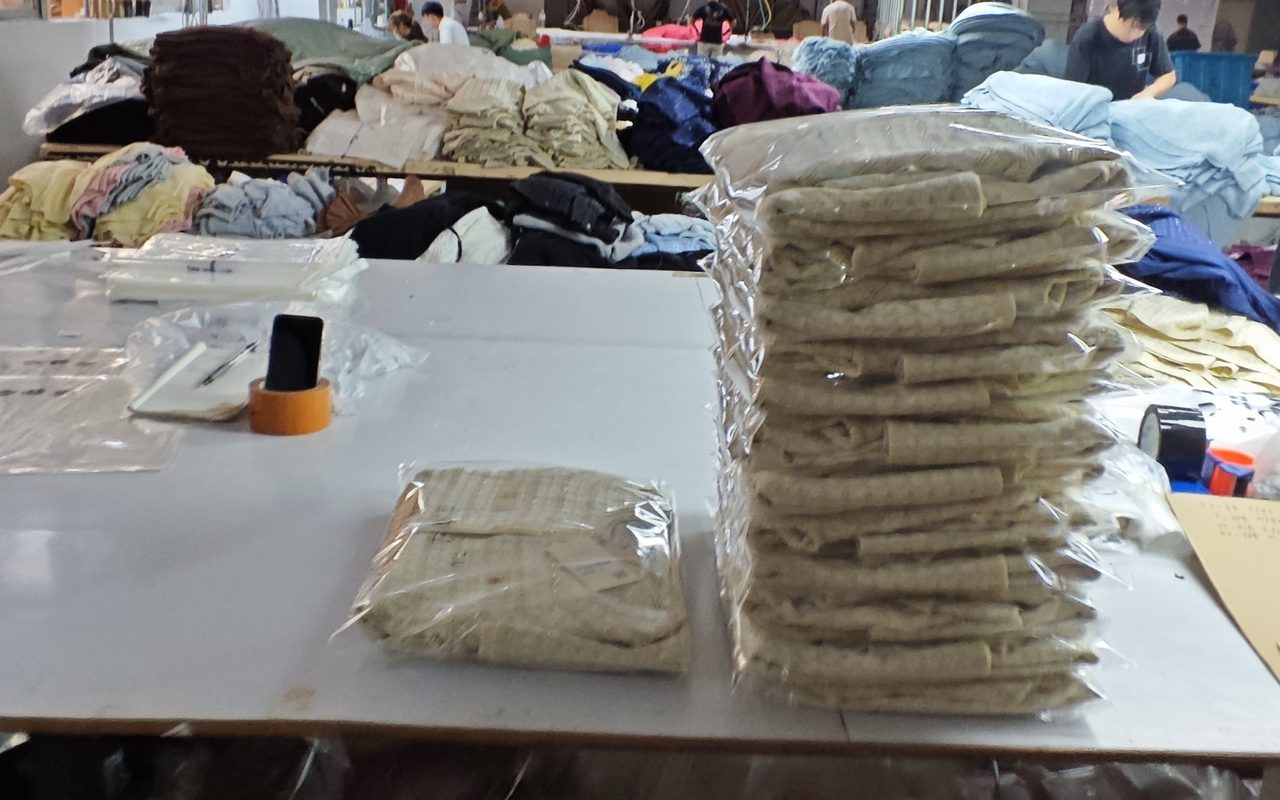
03 What a mill’s answer reveals about its line
You do not need a factory tour to read a line. You need two or three questions whose answers cannot be borrowed from a website. A mill that runs a real line answers them with numbers and conditions. A mill that does not answer with adjectives.
Ask for the gauge range actually in production, not the range the company owns. Ask how the minimum is counted — per style, per colour or per order. Ask which part of finishing is done in-house and which is sent out. Each answer maps to a constraint on your order. None of them is a trick question. A good sweater factory china will answer all three in one short message, because it knows its own floor.
| Question | A useful answer | A warning sign |
|---|---|---|
| “Which gauges are running this month?” | Named gauges with current availability | “We can do everything” |
| “Is the minimum per style, per colour or per order?” | One number with the unit stated | A price with no minimum mentioned |
| “Who does the washing and pressing?” | In-house, or named partner with a timing | “We handle it” with no detail |
The point is not to catch a mill out. It is to find out whether the order and the line can share a calendar.
This is where custom manufacturing factory matching becomes practical rather than theoretical. The answers tell you whether your sample will be washed by the people who knitted it, whether your twelve shades will be treated as twelve jobs or one, and whether your delivery date has a real owner. Those three facts predict more than a catalogue ever will. If you want the broader roles behind the terms, our note on the sweater manufacturer vs knitwear supplier separates who makes the garment from who brokers it.
04 Three mismatches that cost a season
Most factory mistakes do not show up on day one. They show up three weeks in, when the fix is no longer cheap. Three mismatches account for most of what I see.
The gauge mismatch. A buyer sends a photo of a fine-gauge sweater to a mill whose strength is chunky gauges. The mill accepts, because it can knit something of that shape. The stitch definition is wrong, the drape is wrong, and the sample has to be remade on a different machine. Two weeks are gone before the real work starts.
The minimum mismatch. A small brand plans one style in eight colours at a modest per-colour quantity. The mill’s minimum is per colour, not per style. Nobody said so clearly. The quote looked acceptable until the order was written, and then the maths changed the range from eight colours to two. Our note on the low MOQ knitwear manufacturer explains why 50 pieces per style and per colour are counted separately.
The finishing mismatch. The knitting is right; the washing and pressing are sent to a partner across town with its own queue. The mill can quote a knitting date but not a delivery date. The buyer plans a launch around the knitting date and discovers the garment was not finished on it. This is why a custom knitwear factory should be judged on the whole chain, not the machine.
A wrong gauge costs a sample. A wrong minimum costs your colour range. A wrong finishing chain costs the launch date. None of them shows up in the first email.
Zhao Sheng
05 A fit check before you send the PO
Run this short check before the deposit. It takes ten minutes and it prevents most of the damage above. If any line comes back unclear, the answer is not to hope. It is to ask again in writing.
| Check | What you need in writing |
|---|---|
| Gauge | The gauge your structure will actually run on, and whether it is available |
| Quantity | The minimum unit: style, colour or total order |
| Colour | Whether a shade from your card is dyed, stocked or substituted |
| Finishing | Who washes and presses, and whose calendar that sits on |
| Sample | Whether the sample goes through the same finishing as bulk |
| Date | One delivery date that includes finishing, not a knitting date |
Six lines. If a mill will not answer them before the PO, that is itself an answer about fit.
Buyers often treat this as an interrogation. It is not. A factory that wants the order wants the order to work. Clear answers protect both sides. My own preference is simple: I would rather lose an enquiry at this stage than accept an order that our line will handle badly. That is the whole logic of custom knitwear factory matching.
06 Where a factory should say no
A line has edges. A mill that recognises its edges will tell you where they are. If a factory says yes to every gauge, every minimum and every date, it is not flexible. It has not told you the truth about its line yet.
We say no when a structure needs a gauge we do not run, when a colourways count turns a small order into twelve separate jobs, or when a date ignores the finishing queue. We also say no when a buyer wants us to quote from a photograph without the stitch structure fixed. None of those refusals is about willingness. They are about fit. A knitwear supplier that never refuses anything is either guessing at its own capacity or planning to solve the mismatch after you have paid.
The useful outcome of a no is a better direction. If the gauge is wrong, we can say what gauge the structure needs. If the minimum is wrong, we can say what quantity makes the order sensible. A good match often starts with a factory declining the first version of the order and explaining the second. That conversation is worth more than a quick yes. First-order buyers will also find our note on custom knitwear for startups useful for the wider sequence around a first run.
Questions buyers ask about factory matching
References
- 15 U.S.C. §70 — Textile Fiber Products Identification Act, Legal Information Institute, Cornell Law School.
- 16 CFR Part 303 — Textile Fiber Products Identification, Electronic Code of Federal Regulations.
- 16 CFR Part 423 — Care Labeling of Textile Wearing Apparel, Electronic Code of Federal Regulations.
- Harmonized Tariff Schedule of the United States, U.S. International Trade Commission.
- Knitwear supplier vs manufacturer — what each term covers, Liming Knitwear.
- What buyers check at a high quality sweater manufacturer, Liming Knitwear.
The next time you shortlist a custom knitwear factory, skip the ranking. Describe your order shape, ask three specific questions, and watch which mill answers in numbers. The right factory is not the best one. It is the one that fits. Send us your gauge, your quantity and your date and we will tell you honestly whether we are that factory — or which kind of mill you need instead.
Not sure which factory fits your order?
Send the structure, the quantity and the date. We will tell you what we can run — and where a different line would serve you better.
WhatsApp / WeChat +86 137 1519 6498 · sychen@limingknitwear.com