Custom Pullover Manufacturer: Pullover vs Sweater Specs
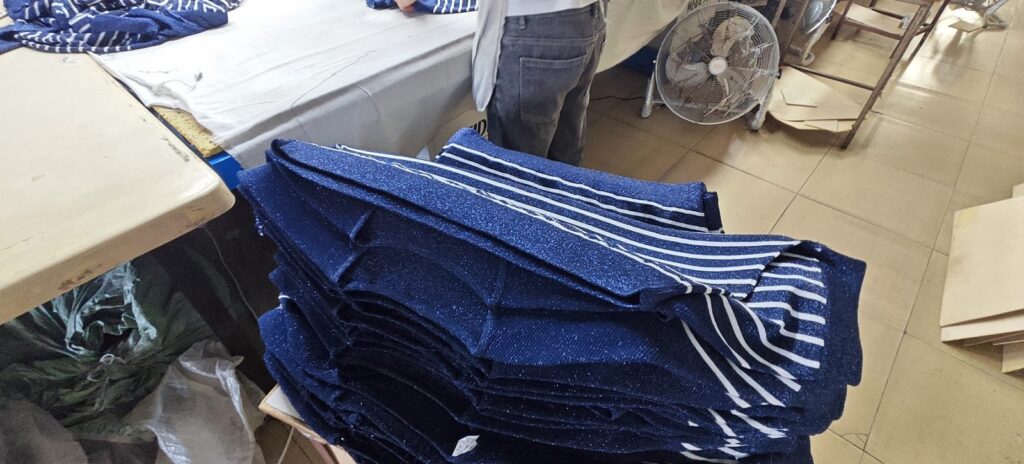
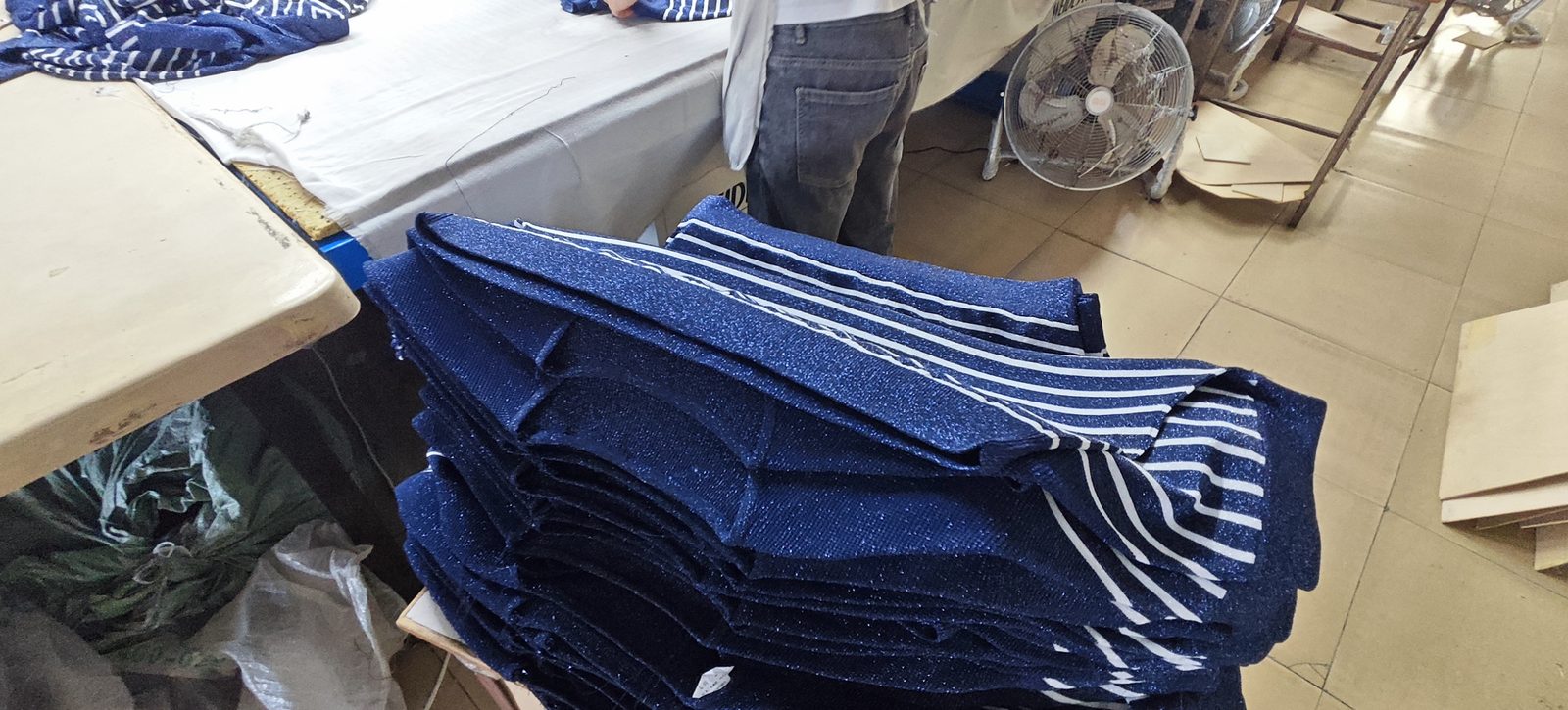
A one-line enquiry cannot be quoted. This is the field-by-field method a pullover manufacturer uses to turn “500 pullovers, best price?” into a number both sides can trust.

“500 pullovers, best price?” is not a question a factory can answer. It is a question a factory has to ask back — five times.
As a custom pullover manufacturer in Dongguan, I get the same first email every week: “We need 500 pullovers, send your best price.” I cannot price it. “Pullover” tells me how the garment goes on, not which yarn, which gauge, or which of our machines should make it. Two factories answering that email will return two unrelated numbers, and both will call them quotes.
This page is a working method, not a dictionary. It shows what to write in a first enquiry, what each line changes in the price, and how to compare two quotes that look nothing alike. If you are sourcing a pullover sweater from a pullover manufacturer for the first time, follow the five sections in order. By the end you should be able to write one paragraph that needs no follow-up questions.
A price is a sentence about yarn, gauge, labour and finish. An enquirer who supplies none of those is asking for a guess, not a quote.
Zhao Sheng, on the one-line enquiry
- One line is never enough. “500 pullovers” names a garment, not a specification. A factory must ask back before it can price.
- Five fields close the gap. Product route, construction, yarn, gauge, and neckline finish. One plain sentence each.
- Structure is a cost ladder. Every extra operation — rib, intarsia, linking, wash — adds time. Know which rung you are buying.
- Compare quotes on a shared base. If one factory answered a field the other skipped, the cheaper number is for a different item.
- Our published line: 120+ flat knitting machines, 3GG–16GG, about 1,600,000 pieces a year, 5,000 m² floor, MOQ 50 pieces per style per colour, samples 3–7 days, bulk 20–25 days. We make the knitted version.
Why “500 pullovers, best price?” cannot be quoted
Read that email as a factory reads it. “500” gives a quantity, which helps. “Pullover” gives a wearing method — over the head — and nothing about material, weight, needle count or edges. The five questions that follow are unavoidable. A supplier who answers without asking them has either guessed or assumed a specification you did not give.
| What the email says | What we must ask back | Why it moves the price |
|---|---|---|
| “500 pullovers” | Knitted from yarn, or cut and sewn from fabric? | Two different machines, two different cost bases |
| (nothing on material) | Which fibre, which yarn count, which weight per piece? | Yarn is the largest single input in a knit |
| (nothing on gauge) | 3GG coarse or 16GG fine? | Gauge sets knitting time and hand feel |
| (nothing on the edge) | Rib knitted in, or a band sewn on later? | One extra operation, one extra seam |
| (no destination) | Which market, which label language? | Fibre and care wording must match the market |
A supplier who returns a number without these answers is pricing a garment of their own invention.
None of this is pedantry. Search terms like what is a pullover or pullover vs sweater are usually asked by people who already know what the garment looks like and want the language right. The language is the easy part. The specification behind it is what decides whether the sample matches the bulk.
Sending a retail photo as the whole brief. A photo shows a look; it does not show fibre content, gauge, or whether the rib was knitted in. We treat photos as direction, never as measurement.
We draw the same line when a buyer asks for a sweater or a sweatshirt in one enquiry. The two may share an outline. They do not share a production line, and a single email cannot price both.
Five fields, each written as one plain sentence
The fix is not a longer form. It is five sentences, each naming one decision. Write them the way you would explain the garment to someone who has never seen it. Below is the exact shape we need; copy it and substitute your own values.
| Field | Send this line | What we return |
|---|---|---|
| Route | “Knitted pullover from yarn, no full front opening.” | Confirmation it belongs on the flat-knit line |
| Construction | “Drop shoulder, set-in sleeves, no placket.” | Panel shape and linking plan |
| Yarn | “Cotton/acrylic blend, 2/28s, 260 g per piece.” | Source, lot and what can be held across the run |
| Gauge | “12GG, with a medium-weight hand feel.” | Whether that feel is achievable at that gauge |
| Edges | “2×2 rib at neck, hem and cuff, knitted in.” | Rib width and whether linking is required |
Five lines. No adjectives about quality, no borrowed catalogue photo. This is enough for a first price and a first sample.

Write the sentence a factory can say yes or no to. “Looks like this photo” gets a polite answer; “12GG, 2×2 rib knitted in” gets a price.
Zhao Sheng, on the five-line brief
Product titles can stay local. In the US a buyer writes “sweater”; in the UK “jumper”; in a European catalogue “pullover”. Searches such as jumper vs sweater vs pullover and pullover vs jumper are three markets reaching for one garment. Keep whichever word your range sheet prefers in the title, and put the five sentences in the technical fields. That separation is the whole method.
The same discipline applies to a first order from sketch to bulk: the sketch carries the look, the field lines carry the price. Neither replaces the other.
The construction ladder: what each extra operation adds
Once the five fields are set, the next surprise is the price ladder. Two pullovers with the same yarn and gauge can still be far apart, because one climbs through more operations than the other. Each rung is a real decision, not a premium for its own sake. Know which rung you are buying before you compare numbers.
| Rung | What is added | What it buys |
|---|---|---|
| 1 · Base knit | Front, back and sleeves knitted to shape at one gauge | The lowest price for a plain over-the-head garment |
| 2 · Knitted rib | Rib worked into the panel rather than sewn on | A cleaner edge and one fewer seam |
| 3 · Colour work | Intarsia or jacquard across the body | Pattern, with extra programming and slower knitting |
| 4 · Full linking | Panels joined by linking rather than overlock | A flatter seam and more hand time |
| 5 · Wet finish | Wash, board and press to a measured size | Consistent dimensions and hand feel in bulk |
These are operations, not upsells. A buyer who needs rung 3 and is quoted rung 1 has not found a cheaper factory — they have received a different garment.
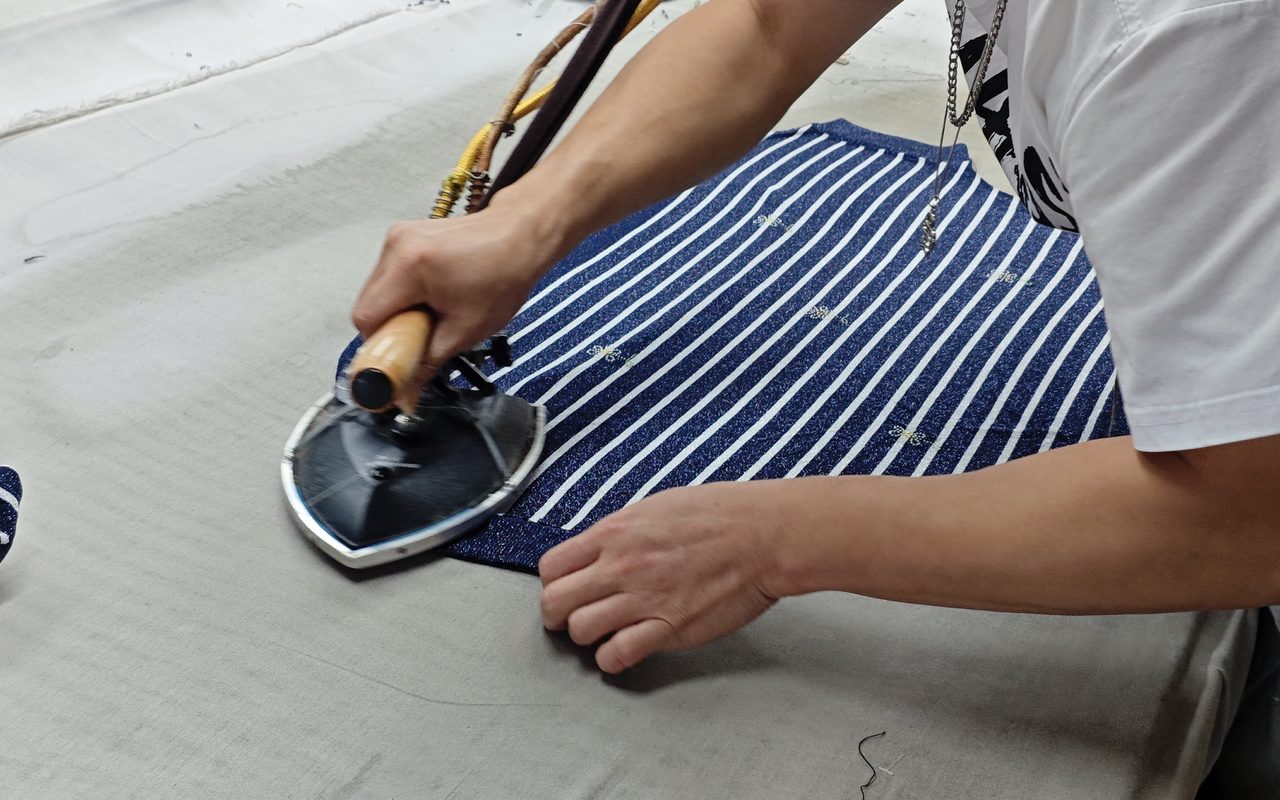
This ladder is why a photo is a poor basis for comparison. A striped pullover can be knitted in the colour or printed on afterwards; the two look similar at a distance and sit on different rungs. Ask which operation produced the pattern, and the price suddenly makes sense.
Every extra operation is a line on the cost sheet. If your brief does not name the operation, the factory chooses one for you — and bills you for it.
Zhao Sheng, on reading a price ladder
The boundary matters too. A fleece or cut-and-sew version is not a rung on this ladder; it is a different ladder. Our note on how buyers and factories name the same garment explains why the word alone cannot tell you which production line is being quoted.
Three briefs that get priced wrong
Most bad quotes start with a bad brief, and the same three patterns recur. Each has a cheap-looking version and a correct version. The difference in the returned price is not a discount; it is a different item quietly substituted.
| Brief | As written | As it should read | What went wrong |
|---|---|---|---|
| The lookalike | “Same as this picture.” | “12GG, 260 g, 2×2 rib, knitted in.” | Photo carries no measurable fields |
| The wrong line | “Pullover, fleece feel.” | “Knitted cotton/acrylic, brushed finish.” | Fleece implies cut-and-sew, not our line |
| The mixed order | “500 pullovers, 6 colours, assorted sizes.” | “500 per style per colour, size curve attached.” | MOQ applies per style per colour, not in total |
Our knitted minimum is 50 pieces per style per colour. A 500-piece order spread over six colours is six discussions, not one.
The third row causes the most arguments because it looks like a logistics detail. It is a cost driver. Yarn is bought and dyed by colour, and a short run per colour changes both the unit price and what can be held for a repeat. State the quantity per colour, not the grand total, and the answer becomes comparable.
Fibre naming is another place where a brief goes wrong. Buyers searching sweatshirt vs pullover or the difference between pullover and sweatshirt are often comparing a cut-and-sew top with a knit. The shape matches; the input does not. Label rules then require the fibre content by name and percentage, so a vague material line becomes a compliance problem later. Our note on what a certification actually covers shows the same habit of matching documents to the goods.
“Assorted sizes” hides a size curve. Send the curve. A factory without it assigns one for you, and the bulk will not match the sample ratio you approved.
How to read two quotes that look nothing alike
You will sometimes receive a cheap number and an expensive number for what seems to be the same brief. Before assuming one factory is overcharging, put the two quotes side by side and ask three questions. In most cases the cheaper quote answered fewer fields.
| Question to ask both factories | If one cannot answer |
|---|---|
| Which yarn count and weight per piece? | They priced an assumed fabric weight |
| Is the rib knitted in or sewn on? | They left an operation out of the number |
| Is the price per colour or for the total? | You are comparing different quantities |
Three answers are enough to tell whether two quotes describe the same garment. If they do not, align the fields before discussing price.
This is also how you read a custom pullover quote from overseas. A factory that names the yarn, gauge, operation and per-colour quantity has understood the brief. A factory that returns a single round number has priced a garment of its own design — possibly honestly, but not the one you described.
For a second reference on writing a brief that survives translation, our note on which supplier type is actually quoting you sets out the two cost bases side by side. And if the range includes an opening at the front, the cardigan construction difference belongs in the same first email.
A cheap quote is only cheap until the missing operations are added back. Align the fields first; then talk about price.
Zhao Sheng, on comparing supplier numbers
Questions buyers ask at the enquiry stage
What should I put in my first email?
Five lines: knitted or cut-and-sew route, construction, yarn count and weight, gauge, and how the edges are finished. Add the quantity per style per colour and the destination market. That is enough for a first price.
Why did two factories quote so differently?
Almost always because they priced different fields. One assumed a yarn weight, the other asked; one knitted the rib in, the other sewed it on. Ask both the same three questions before comparing the numbers.
Does a photo count as a specification?
No. A photo shows the look, not the fibre, gauge or operation. Send it as direction, then write the five field lines underneath it. The photo guides the sample; the fields decide the price.
What is a pullover sweater, in plain terms?
A knitted top with no full front opening, pulled over the head. Front, back and sleeves are knitted as shaped panels and linked together. If you want custom pullover sweaters, name the yarn, gauge and rib finish in the brief.
How much does gauge change the price?
Gauge changes knitting time and yarn consumption. A 3GG piece and a 16GG piece are not interchangeable; the fine one takes longer and uses a different yarn. State the gauge and the hand feel you want in the same line.
Do I need to name the fibre in the first email?
Yes. Fibre drives the largest input cost and it must appear on the label by name and percentage. A vague “cotton feel” leaves the factory to choose, and the choice changes both price and compliance.
Can I split the order across colours?
Yes, but the minimum applies per style per colour, not to the total. Our knitted minimum is 50 pieces per style per colour. Send the quantity per colour and the size curve, and the quote will be comparable.
What happens if my brief changes after the sample?
Any change to yarn, gauge or operation is a new specification and is priced again. Freeze the five field lines before sampling; a field changed after approval is the most common cause of a sample the bulk cannot match.
References
The legal points above are summarized, not quoted as advice. Check the current text with the authority or your importer’s adviser before relying on it.
- 16 CFR 303.1 — Definitions under the Textile Fiber Products Identification Act, Legal Information Institute, Cornell Law School.
- 16 CFR 303.6 — Requirements for fibre content labels, Legal Information Institute, Cornell Law School.
- 15 U.S.C. §70 — Textile Fiber Products Identification Act, Legal Information Institute, Cornell Law School.
- 16 CFR 423.1 — Definitions under the Care Labeling Rule, Legal Information Institute, Cornell Law School.
- Harmonized Tariff Schedule, heading 6110 — knitted or crocheted pullovers, U.S. International Trade Commission.
- 19 CFR 134.11 — Country of origin marking, Legal Information Institute, Cornell Law School.
Send the five lines, not the word
Route, construction, yarn, gauge, edges — plus the quantity per colour. Send those and we will tell you whether it belongs on our knitting line, with a price that can be checked.
WhatsApp / WeChat +86 137 1519 6498sychen@limingknitwear.com
— Zhao Sheng (赵生), Owner, Liming Knitwear · Dalang, Dongguan, China